
 Lamborajo Editorial Desk
 On this page
Allocating cabins for twenty people on a Komodo boat is a maths problem first and a politics problem second: an 8-cabin boat gives you 2.5 people per cabin on average, so someone shares and someone does not, and the only question is whether that gets decided in a spreadsheet before departure or in a corridor argument after boarding. Do it in the spreadsheet.
Last updated: August 17, 2026
Start with the berth map, not the name list
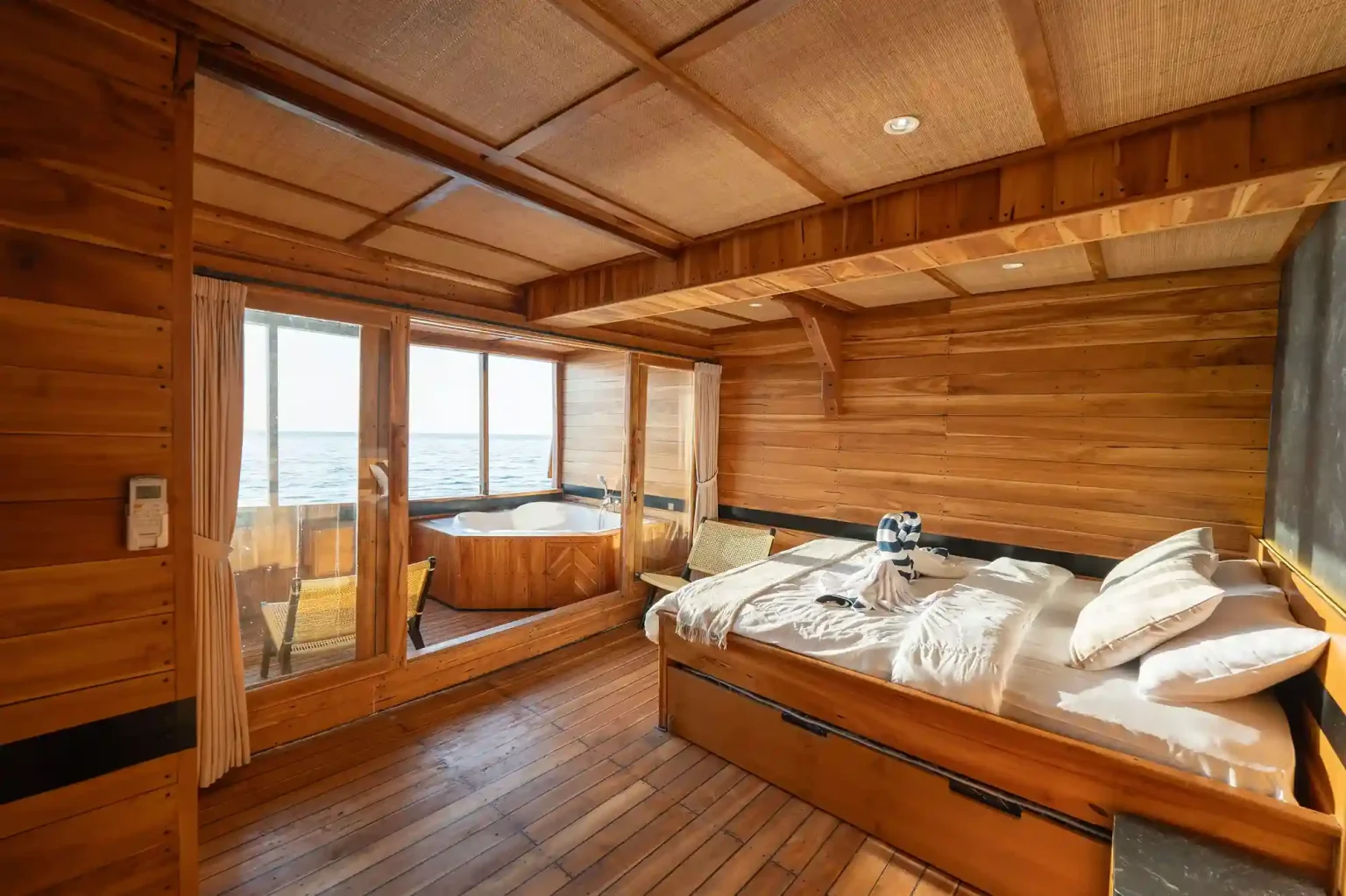
Every hull distributes its berths differently, and the distribution — not the total capacity — decides how your group fits. Across our own fleet: Lamborajo I sleeps up to 24 in just 6 cabins, meaning larger multi-berth rooms; Lamborajo II spreads up to 25 across 8 cabins; Lamborajo III takes 22 across 8, all en-suite. The same twenty people are two very different allocation puzzles on a 6-cabin versus an 8-cabin boat — full layouts are on the fleet specs page, and the group-focused breakdown on Komodo boats for 20–25 people.
The allocation sequence that avoids arguments
- Fix the pairs and clusters first. Couples, siblings, best friends — the pairings nobody disputes. They anchor the map.
- Assign the multi-berth cabins to natural clusters. On a 6-cabin hull, the four-berth rooms go to friend groups or family units who choose to be together, never to strangers drafted together to make the numbers work.
- Give solo travellers the honest choice. Share with a same-gender colleague at the standard split, or take a cabin alone where the group’s split rules price that privilege — the fair-split arithmetic is worked through in our group cost per person guide.
- Publish the map before anyone packs. A cabin list circulated a week out gets two quiet corrections; the same list taped up on boarding day gets a queue at the organiser’s elbow.
The three rules seasoned organisers follow
- Seniority gets the quiet cabin, not the big one. On office trips, the cabins nearest the engine room or the stern deck hear more of the generator and the late crowd. Swap along the noise gradient, not the size gradient, and nobody can call it favouritism.
- Light sleepers forward, night owls aft. The stern deck is where karaoke and conversation end late; putting the 21:30 sleepers directly beneath it is the most common self-inflicted wound in group allocation.
- Nobody moves after night one. Announce it in advance. Cabin-swapping mid-trip converts one person’s mild preference into three people’s repacking.
Odd numbers, awkward cases
Twenty into eight cabins yields four doubles and four rooms of three, or six doubles and two quads, depending on the berth map — there is no configuration where everyone gets a double. The organiser’s job is to distribute the sharing, not eliminate it. Practical fixes: the three-berth cabins go to the youngest cohort by default (they mind least and say so), and any genuinely difficult case — a snorer of legend, a colleague with mobility needs who should be nearest the saloon — is flagged to the desk in advance so the crew can advise which specific cabin solves it.
What to send the boat before boarding
One document: cabin number, occupant names as per passports, dietary flags, and any medical notes. The crew uses it for park manifests, the galley uses it for meals, and boarding takes eleven minutes instead of forty. Groups comparing berth maps across the wider harbour can survey the Komodo boat charter fleet catalogue; for the specific berth-by-berth map of any hull in this fleet on your dates, ask the reservations desk on WhatsApp.
Quick answers
Should the organiser take the best cabin?
Take a middle one. It costs nothing and buys authority for every allocation call you make afterwards.
What about mixed-gender sharing among colleagues?
Default to same-gender sharing for anyone not a couple, and say so in the first planning message. It is the norm on Indonesian staff trips and pre-empts the one complaint HR actually has to act on.
How early should the cabin map be locked?
Circulate a draft two weeks out, take corrections for three days, then freeze it with the manifest a week before departure — the same document the boat needs for park permits anyway. Late joiners inherit whatever berth is left; announcing that rule up front is what makes it painless.
Does cabin choice affect seasickness?
Lower and more central berths move less than high or far-forward ones, so put your known sufferers midships and low if the berth map allows. Crossing days are short inside the park and most anchorages are calm, but on the first and last sailing legs the difference between a midships bunk and a bow cabin is real enough to be worth planning around.
Send your dates and group size — the reservations desk replies with live availability and the current rate.
Keep reading
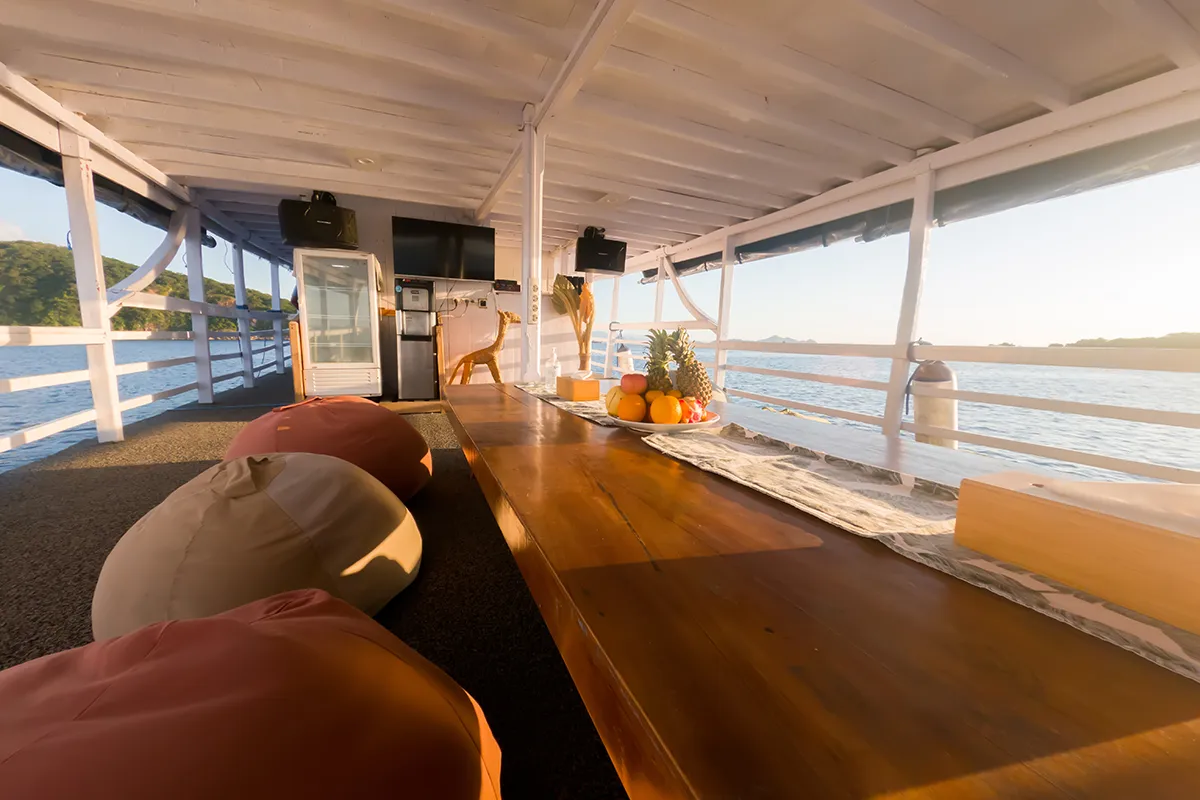 Who Is Aboard: What a Komodo Charter Crew Actually Does All Day
Fleet & Charter Guides
Who Is Aboard: What a Komodo Charter Crew Actually Does All Day
Fleet & Charter Guides
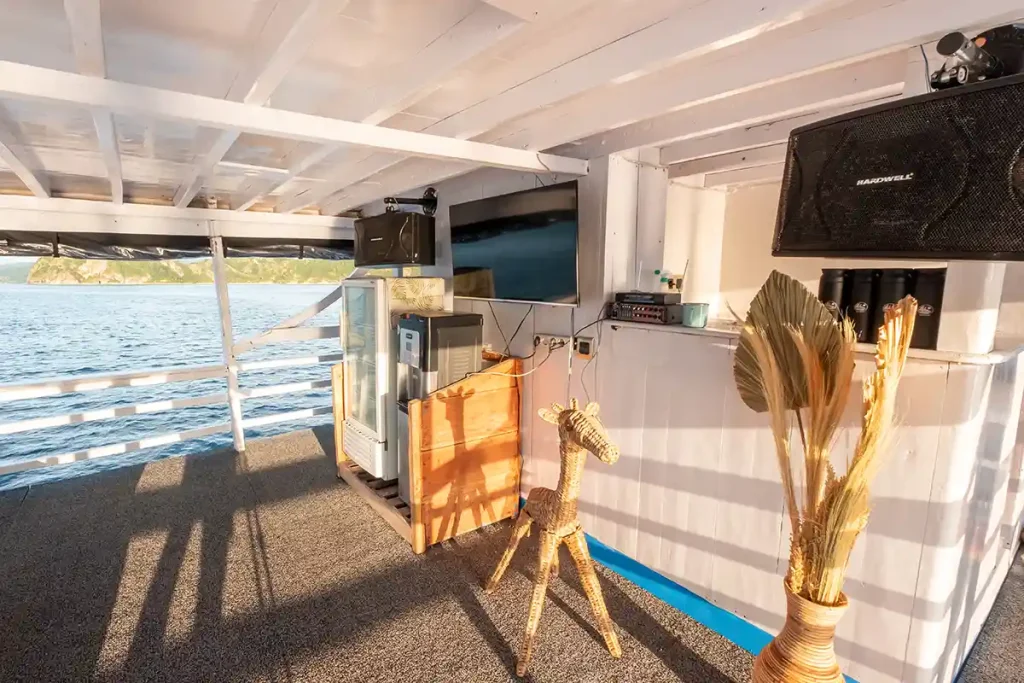 Karaoke on a Komodo Boat: Why Group Charters Ask About It First
Fleet & Charter Guides
Karaoke on a Komodo Boat: Why Group Charters Ask About It First
Fleet & Charter Guides
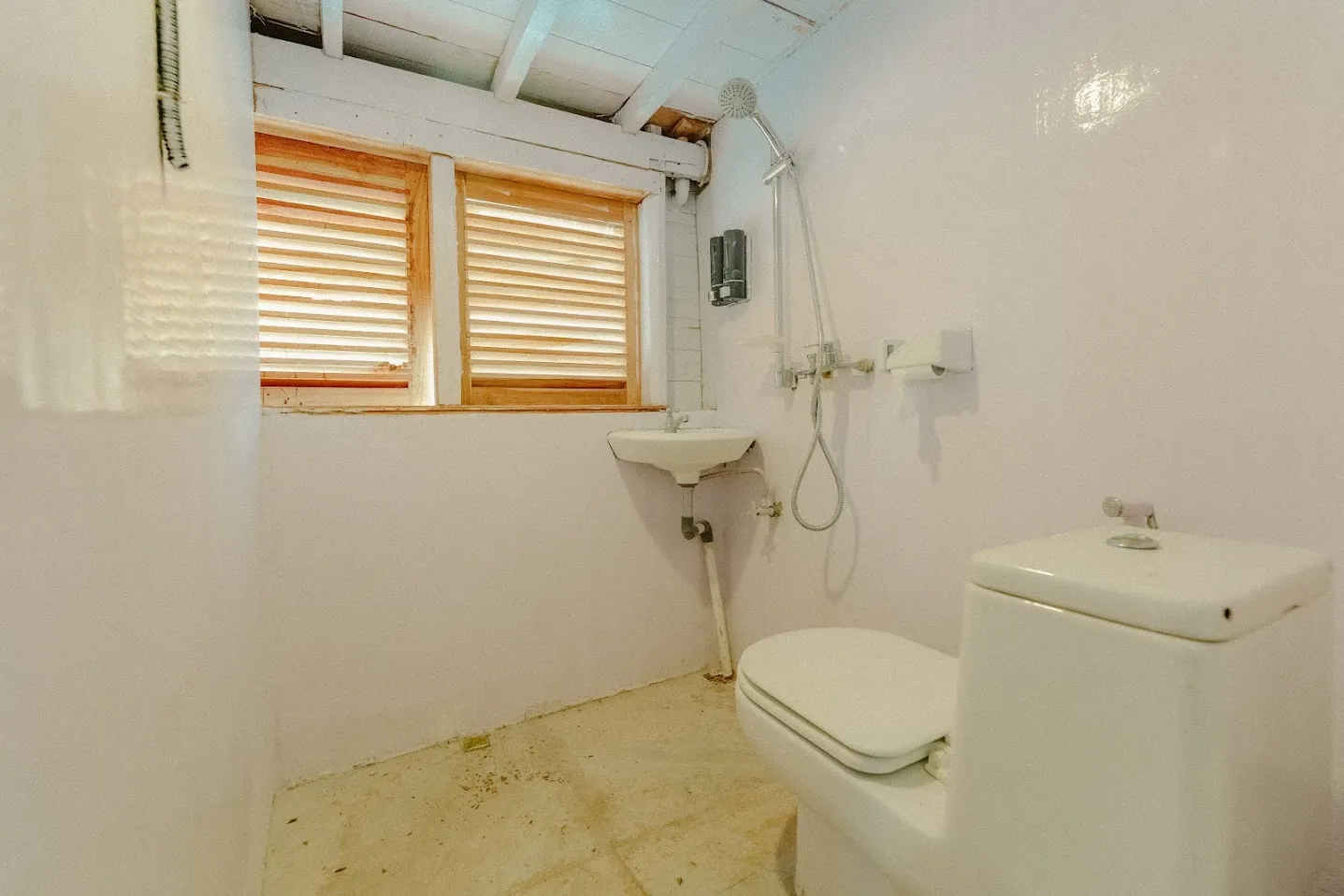 Shared Bathrooms on a Komodo Boat: What They Are Really Like
Fleet & Charter Guides
Shared Bathrooms on a Komodo Boat: What They Are Really Like
Fleet & Charter Guides
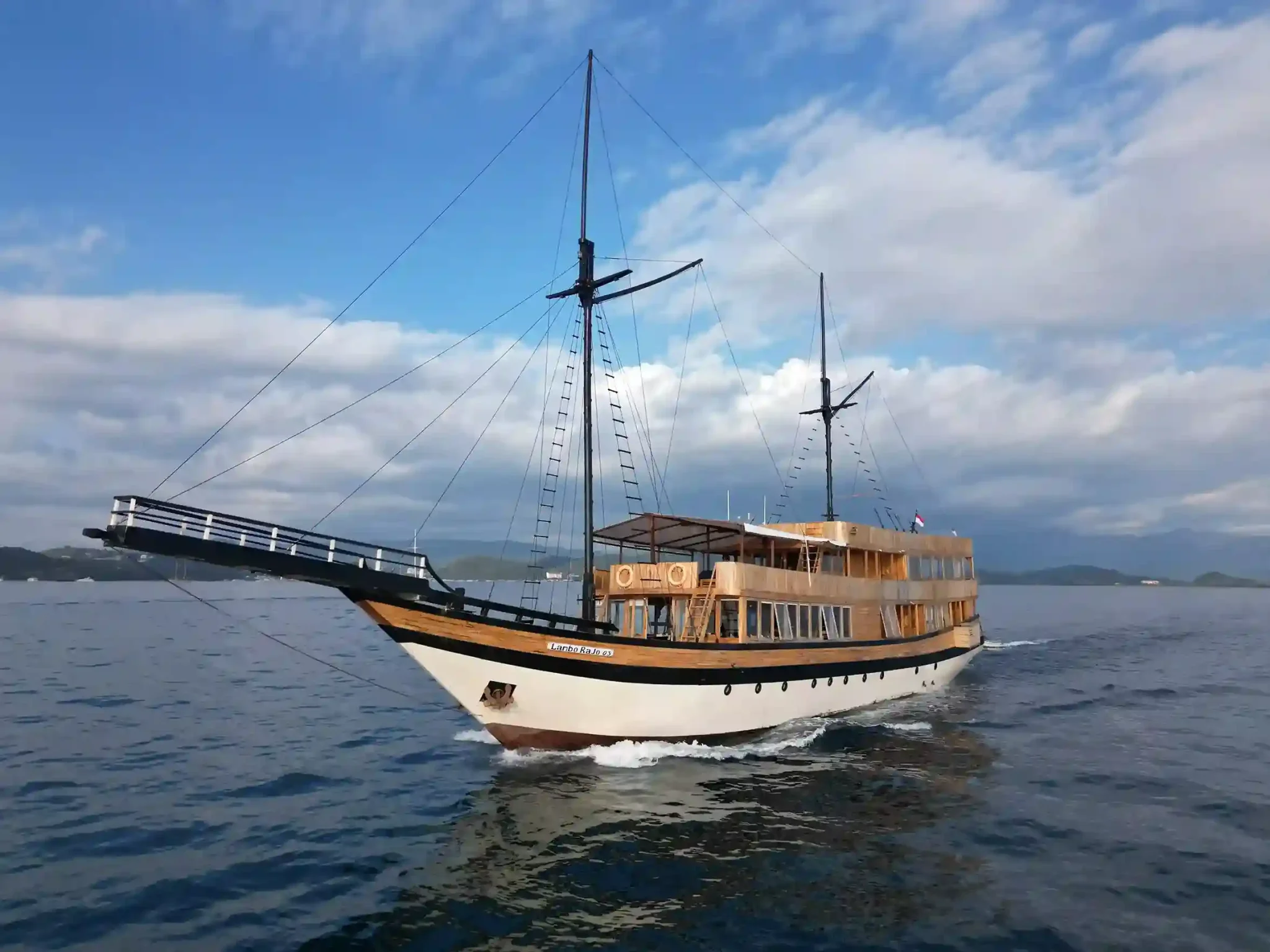 Komodo Luxury Yacht Charter: How Renting a Boat in Komodo Actually Works (2027 Guide)
Fleet & Charter Guides
Komodo Luxury Yacht Charter: How Renting a Boat in Komodo Actually Works (2027 Guide)
Fleet & Charter Guides