

 Lamborajo Editorial Desk
 On this page
Take a motion-sickness tablet 45 to 60 minutes before boarding, not after symptoms start. Then stay on deck, watch the horizon, keep eating small amounts, and sleep low and midships. Most of a Komodo itinerary runs in sheltered water in legs of thirty to ninety minutes — the one genuinely exposed stretch, Kalong to Padar, is run overnight while you are lying down.
Seasickness is the single most common worry we hear from people booking their first boat trip, and it is usually overestimated. The Komodo route is not an ocean crossing. It is a series of short daylight hops between islands, with anchorages chosen for shelter, and a large majority of guests never take a tablet at all. But if you know you are susceptible, the difference between a good trip and a miserable one is made before you leave the pier.
How do I avoid seasickness on a Komodo boat trip?
| Measure | When | How effective |
|---|---|---|
| Antihistamine tablet (dimenhydrinate, cinnarizine, meclizine) | 45–60 minutes before boarding, repeated per the packet | Very effective, prophylactically. Near useless once vomiting has begun |
| Scopolamine patch | Applied the evening before | Effective for multi-day trips; ask a pharmacist about side effects |
| Stay on deck, eyes on the horizon | Whenever under way | Very effective and free |
| Sit or lie midships, low down | During longer legs | Effective — least pitch and roll on the vessel |
| Eat small, dry, frequent food | Throughout | Effective. An empty stomach is worse than a light one |
| Sleep during the overnight leg | Kalong to Padar | Very effective; you sleep through the only exposed stretch |
| Ginger, acupressure bands | Anytime | Mild, variable. Harmless and worth trying alongside medication |
| Reading, phone screens, below-deck cabins in a swell | — | Makes it worse. Avoid |
| Alcohol the night before | — | Makes it much worse. Avoid |
Which parts of the route are actually rough
| Leg | Typical conditions | Comment |
|---|---|---|
| Labuan Bajo → Kelor (~1 hour) | Sheltered | Easy first leg; good gauge of how you feel |
| Kelor → Manjarite → Kalong | Sheltered | Short hops between islands |
| Kalong → Padar (~3–4 hours) | Most exposed leg of the trip | Run overnight or pre-dawn; you are in your bunk for it |
| Padar → Pink Beach → Komodo | Mostly sheltered | Short daylight legs |
| Manta Point → Taka Makassar → Siaba | Current, little swell | Current is a snorkelling factor, not a comfort one |
| Siaba → Kanawa → Labuan Bajo | Sheltered | Calm final morning |
That table is the reassurance most people need. Adding up daylight movement, you spend roughly two and a half to four and a half hours a day under way, in stretches rarely longer than ninety minutes, and the exposed passage happens while you sleep. Full leg timings are in our sailing time table.
Season matters more than the boat
April to June and September to November give the calmest sea of the year. July and August are dry and clear but genuinely windy in the open straits, particularly around Padar — a factor people underestimate because they associate peak season with perfect conditions. December to March is the west monsoon, when swell builds, itineraries get rearranged and some departures are cancelled outright.
If seasickness is a serious concern for anyone in your group, book the shoulder months. It is a bigger lever than any tablet. The month-by-month detail is in our sea and crowd table.
Boat size and where you sleep
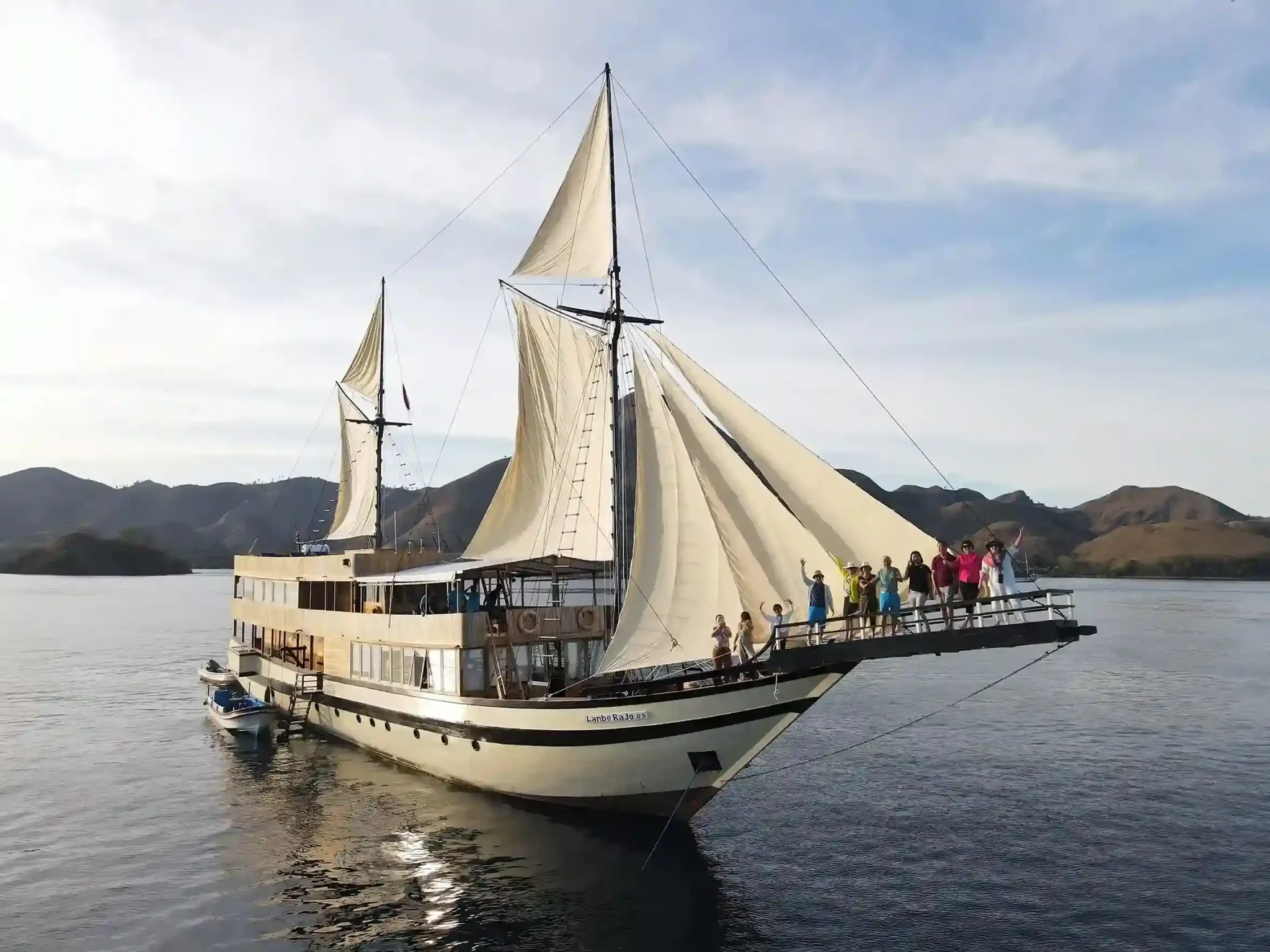
Larger vessels move less. A 38-metre hull like Lamborajo III rides more steadily than a small wooden boat in the same water — mass and beam damp the motion. That is a real advantage of chartering a larger phinisi if anyone aboard is sensitive.
Cabin position matters too. Motion is least amidships and low in the hull, and worst forward and high. If someone in your group is a poor sailor, put them in a mid-ship cabin and tell the crew — they will make the swap without fuss. Cabin layouts for all three vessels are on our fleet page.
If it happens anyway
Get on deck immediately, into fresh air, and look at the horizon or at land. Sit down, midships, and stop trying to be useful. Sip water or weak sweet tea rather than gulping. Eat a plain biscuit if you can. Tell a crew member — they see this regularly, they know which side of the boat is out of the wind, and they can ask the captain to alter course or slow down.
Most cases resolve within a day as the body adapts, which is why the second and third days at sea are almost always more comfortable than the first. That adaptation is also why a 3D2N is often gentler on a sensitive sailor than a compressed 2D1N: the worst of it is behind you before the trip ends.
Children, pregnancy and medication
Children are often better sailors than their parents, and the same rules apply at lower doses — check the packet for age limits. Anyone pregnant, on prescription medication or with a medical condition should ask a doctor or pharmacist about motion-sickness drugs before travelling rather than buying something unfamiliar in Labuan Bajo. There is no pharmacy inside the park, so bring what you need with you.
How do I avoid seasickness on a Komodo boat trip?
Is the sea rough in Komodo National Park?
Which months have the calmest sea in Komodo?
Do seasickness tablets work if I take them after I feel ill?
Which cabin is best if I get seasick?
Do bigger boats reduce seasickness?
Travelling with a nervous sailor? Tell Komodo Luxury when you book and cabins, timings and the route can be arranged around it — WhatsApp +62 811 3823 875 or sales@komodoluxury.com.
General travel information only, not medical advice — consult a doctor or pharmacist about motion-sickness medication, particularly during pregnancy or alongside other prescriptions. Sea-state descriptions are operational norms and vary with weather. See also: what to pack for a Komodo boat trip.
Send your dates and group size — the reservations desk replies with live availability and the current rate.
Keep reading
 Embarkation Day at Labuan Bajo Harbour: A Group Leader’s Walkthrough
Practical Tips
Embarkation Day at Labuan Bajo Harbour: A Group Leader’s Walkthrough
Practical Tips
 What Time Do Komodo Boats Get Back, and Which Flight Can You Safely Book?
Practical Tips
What Time Do Komodo Boats Get Back, and Which Flight Can You Safely Book?
Practical Tips
 What Meals Are Served on a Komodo Boat Charter?
Practical Tips
What Meals Are Served on a Komodo Boat Charter?
Practical Tips
 Team Activities That Actually Work on a Chartered Komodo Boat
Practical Tips
Team Activities That Actually Work on a Chartered Komodo Boat
Practical Tips