
 Lamborajo Editorial Desk
 On this page
A crewed Komodo charter typically sails with five to eight working crew for a 20-guest boat: a captain, an engineer, a galley team of one or two, deckhands who double as tender drivers and snorkel spotters, and on group charters a trip leader who interfaces with the park. By the time guests surface for the Padar climb, the crew’s day is already two hours old.
Last updated: August 17, 2026
The roster, role by role
- Captain. Owns the route, the weather calls and the anchorages. In Komodo this is less about open-ocean navigation than about reading tide windows through narrow straits, timing landings against ranger-station hours, and choosing the overnight bay that stays calm if the wind swings. When your itinerary gets quietly resequenced and the day still works, that was the captain.
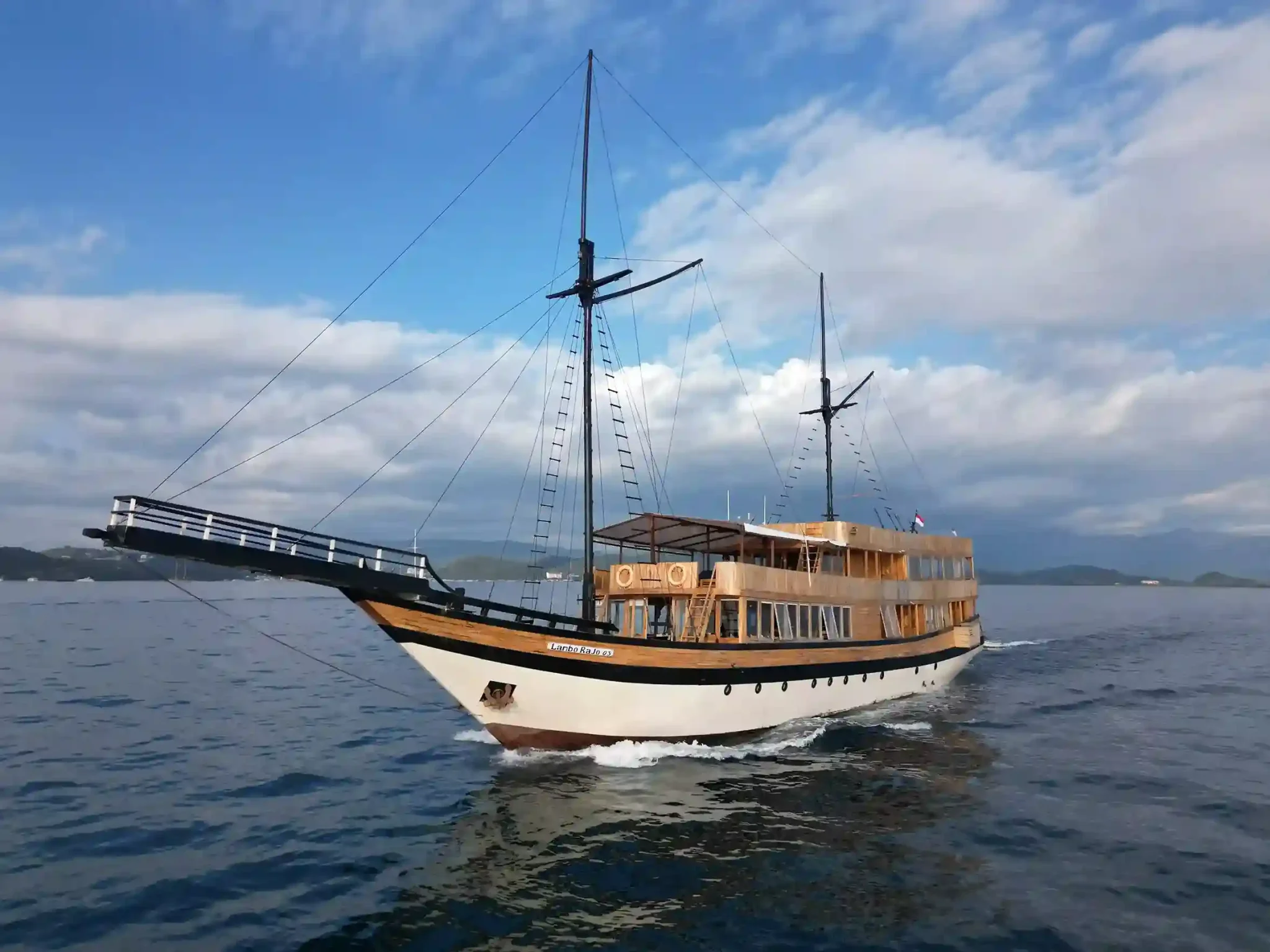
- Engineer. Minds the mains, the generator, the watermaker and the tender outboards. Largely invisible until the moment they are the most important person aboard. On the bigger hulls — Lamborajo III runs a 38-metre platform at 7–10 knots — the engineering routine is a full-time day.
- Galley team. Cooking three meals plus snacks for twenty-plus people from a two-burner marine kitchen, provisioned once in Labuan Bajo, is the hardest physical job aboard. The 04:30 start belongs to them.
- Deckhands. The visible crew: driving tenders, running lines at every landing, rigging the deck shower, spotting snorkellers from the tender at Manta Point, and resetting the deck between activity blocks. Good deckhands learn every guest’s name by day two.
- Trip leader / guide. On group charters, one crew member owns the guest-facing schedule — park permits, ranger coordination on the dragon islands, the daily briefing, and the diplomatic work of getting twenty people into tenders on time without anyone feeling herded.
An unglamorous, precise day
The rhythm behind the holiday: anchor checks and galley prep before 05:00; tenders in the water for the Padar dawn run; breakfast service while repositioning; landing logistics at the ranger station — permits, fee reconciliation, trek grouping; lunch service under way; afternoon snorkel spotting; the fresh-water rinse-down of every mask and fin; dinner; deck reset; anchor watch. Between the fixed points, constant small maintenance — lines, varnish, filters — because salt water never signs off. Multiply the sequence by three days and you understand why a boat that looks effortless is running on a schedule tighter than most offices.
What this means when you choose a boat
Crew-to-guest ratio is a better quality signal than cabin photography. A 24-guest hull running five crew will feed you and land you safely; the same hull running eight crew is the one where the tender is waiting before you thought to ask. Ratios, deck plans and rates across our three vessels are on the fleet specifications page, with the flagship’s full crew configuration detailed on the Lamborajo 3 page.
Working with the crew, as a group organiser
- Name one counterpart. The crew works best through your single organiser, not twenty individual requesters. Route schedule questions through one phone.
- Share your plan before boarding. A birthday, a proposal, a working session on deck — the crew delivers all of it better with a day’s notice than an hour’s.
- Respect the weather calls. When the captain moves the manta stop to the morning, it is because the afternoon current said so. The itinerary is a plan; the captain’s read of the water is the fact.
- Tip as a group. Cash, pooled, handed to the captain on the last morning for distribution across the whole roster — including the engineer nobody saw. There are no ATMs in the park; sort the envelope in Labuan Bajo.
Quick answers
Do Komodo charter crews speak English?
The trip leader and captain generally handle guest English comfortably; deck and galley crew vary. On Indonesian-majority group charters everything runs bilingually without friction.
Is the ranger part of the crew?
No — rangers are park staff, mandatory on every dragon trail at Loh Liang and Loh Buaya, and assigned at the station when you land. Your trip leader arranges and pays them per the park’s group rules; you just walk where they say.
Can the crew handle emergencies?
Boats carry first-aid kits, radios and evacuation protocols back to Labuan Bajo, which is never more than a few hours away inside the park. Serious medical conditions should still be flagged at booking — crews plan around what they know. Across the wider Komodo boat charter network, crew standards are the quiet differentiator between boats that look similar on paper; when comparing, ask about the roster before you ask about the jacuzzi. For this fleet’s crewing on your dates, message the desk on WhatsApp.
Send your dates and group size — the reservations desk replies with live availability and the current rate.
Keep reading
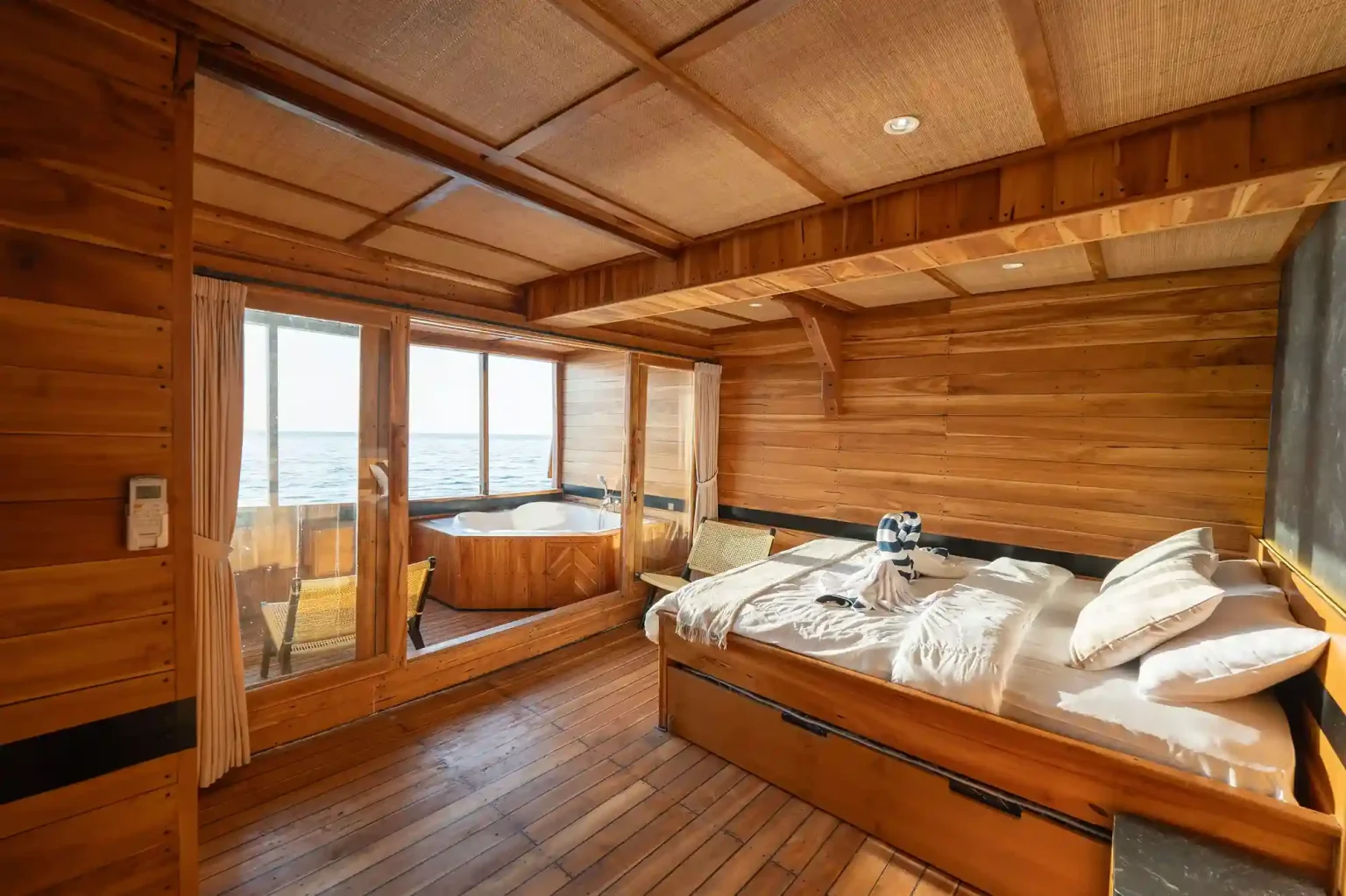 Cabin Allocation for a Group of 20: Who Sleeps Where on a Komodo Boat
Fleet & Charter Guides
Cabin Allocation for a Group of 20: Who Sleeps Where on a Komodo Boat
Fleet & Charter Guides
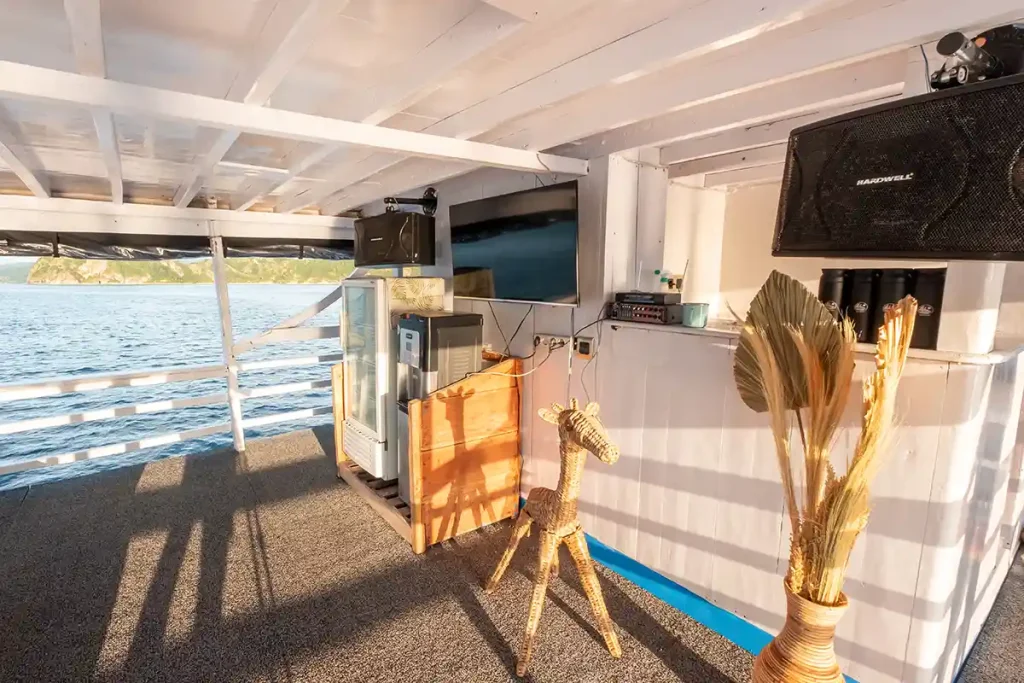 Karaoke on a Komodo Boat: Why Group Charters Ask About It First
Fleet & Charter Guides
Karaoke on a Komodo Boat: Why Group Charters Ask About It First
Fleet & Charter Guides
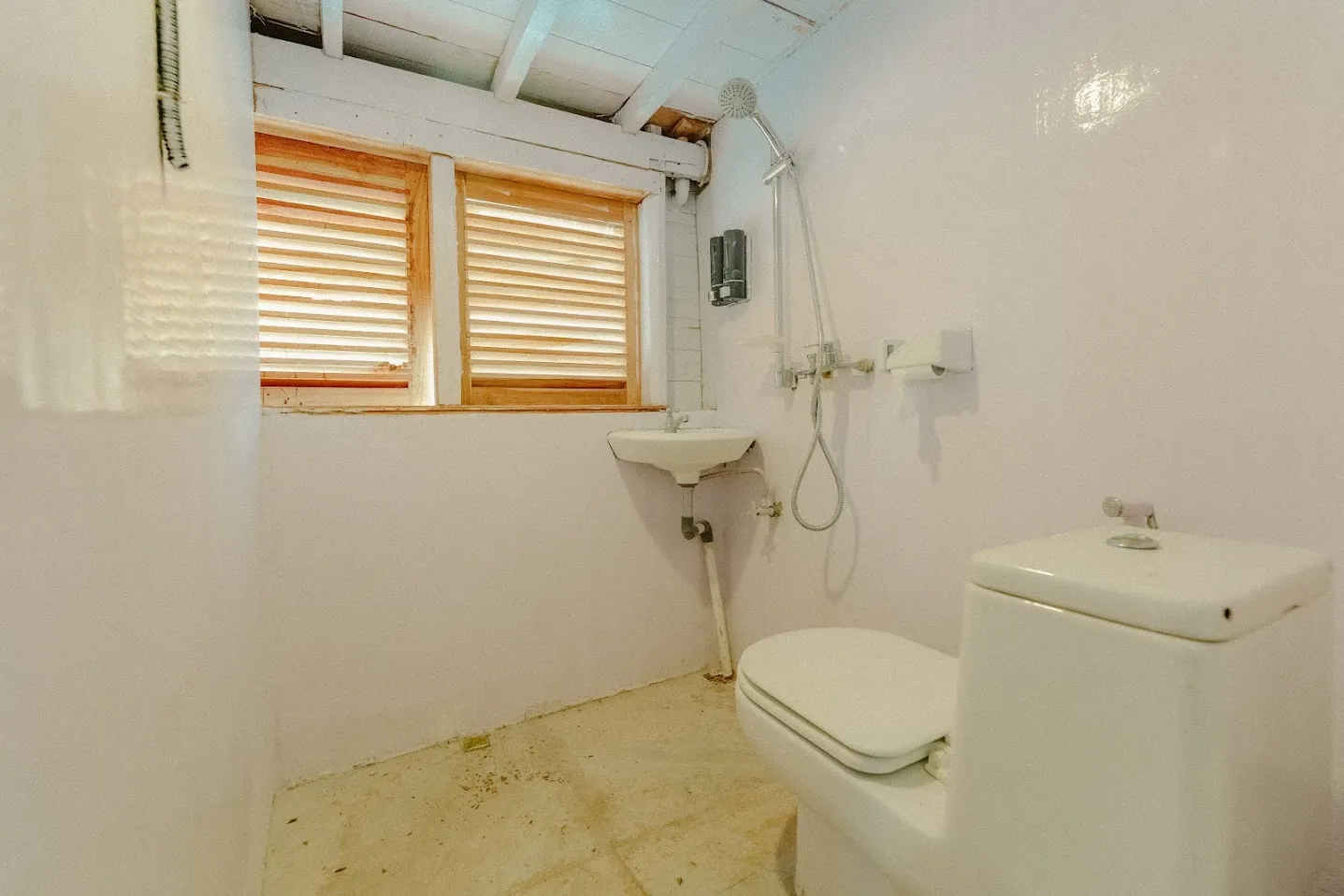 Shared Bathrooms on a Komodo Boat: What They Are Really Like
Fleet & Charter Guides
Shared Bathrooms on a Komodo Boat: What They Are Really Like
Fleet & Charter Guides
 Komodo Luxury Yacht Charter: How Renting a Boat in Komodo Actually Works (2027 Guide)
Fleet & Charter Guides
Komodo Luxury Yacht Charter: How Renting a Boat in Komodo Actually Works (2027 Guide)
Fleet & Charter Guides