 Lamborajo Editorial Desk
 On this page
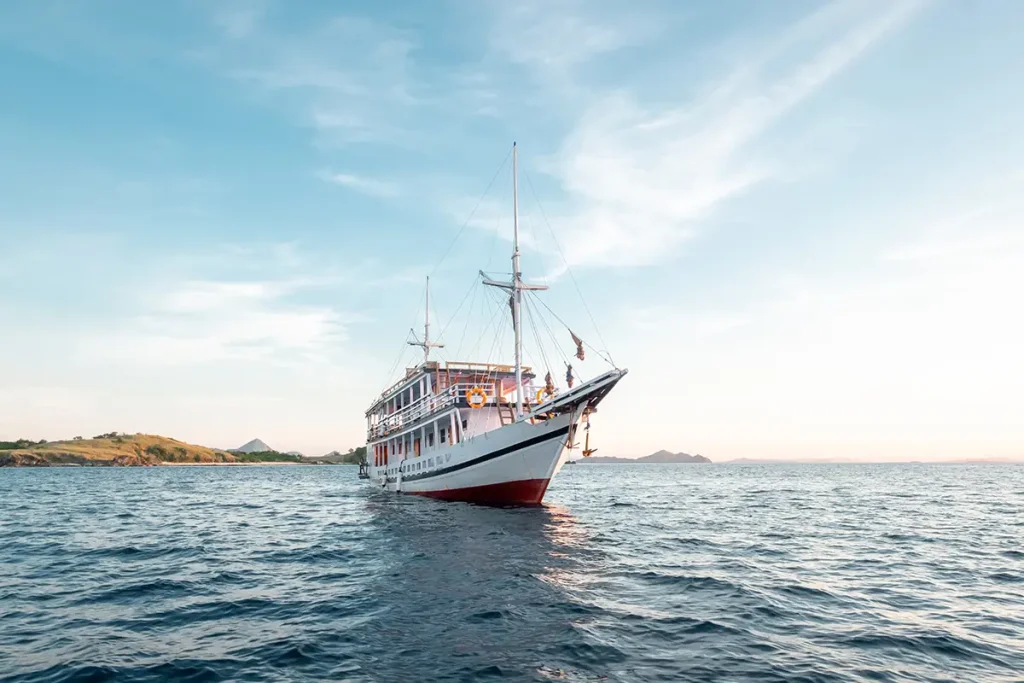
A semi-phinisi is a wooden-built vessel carrying the lines and rig gestures of the traditional South Sulawesi phinisi but powered and laid out as a modern cruiser; a modern cruise yacht drops the tradition entirely for steel-or-composite pragmatism, wider decks and mechanical simplicity. In Komodo both classes sail identical routes — what the difference buys you is atmosphere on one side and volume-per-dollar on the other.
Last updated: August 17, 2026
Where the classes come from
The phinisi silhouette — twin masts, sweeping sheer, bowsprit — descends from the Bugis and Konjo boatbuilding tradition of Sulawesi, recognised by UNESCO as intangible cultural heritage. The tourism fleet reinterpreted it in grades: full phinisi (rigged, occasionally actually sailing), semi-phinisi (the look and the timber, engines doing all the work), and the modern cruise yacht class that abandons the reference altogether. Most of the value fleet serving group charters sits in the last two grades, and the distinction is worth understanding before you shortlist hulls — our own three-boat lineup spans exactly this spread, detailed on the fleet page.
The practical differences, honestly weighted
- Deck character. The semi-phinisi gives you timber underfoot, bowsprit photographs and the romance premium at sunset. The cruise yacht answers with flat, wide, furniture-friendly deck plans — better for twenty people eating together, for karaoke sightlines, for the jacuzzi. For group charters the layout usually beats the poetry.
- Motion. Class matters less than length and beam. A 38-metre hull like Lamborajo III is steadier through the open stretches between Kalong and Padar than any 25-metre vessel of either style — waterline is the comfort spec, not silhouette; see the Lamborajo 3 page for what the flagship’s dimensions do in practice.
- Cabins. Timber hulls spend volume on curves and character; boxy modern hulls convert the same length into more cabin floor and taller headroom. En-suite counts per metre of boat consistently favour the modern class.
- Maintenance reality. Wooden boats live on yard time — honest operators haul, caulk and refit annually, and the good ones show you the schedule. A tired semi-phinisi is the worst of both worlds: the premium look with deferred-maintenance risk underneath. Survey photographs beat brochure photographs.
- Price per berth. Tradition photographs beautifully and charters accordingly. Group-for-group, the cruise-yacht class delivers more berths, more deck and more galley for the same money — which is precisely why the value end of the market builds there.
Choosing by group, not by aesthetic
- Couples, small friend groups, photographers: the semi-phinisi premium is real for you — the boat is part of the picture you came to make.
- Family reunions and office trips of 12–25: the modern class wins on every metric the group will actually vote on afterwards: cabins, bathrooms, deck seating, stability, budget.
- Mixed groups torn between: decide by bathroom count and deck plan, not by hull material. Nobody has ever complained about timber; plenty have complained about queues.
Quick answers
Do semi-phinisi actually sail in Komodo?
Rarely and briefly — sails go up for photographs and the odd fair-wind reach, but schedules run on engines regardless of rig. Buy the class for the deck life, never for the sailing.
Is one class safer than the other?
Safety tracks the operator, not the material: licensing, crew discipline, weather calls and maintenance records. A well-run wooden boat and a well-run steel one carry identical risk profiles on these routes; a badly run anything does not.
Which class dominates the value-group market?
The modern cruise class, overwhelmingly — the economics of berths-per-metre decide it. The full spread from budget timber to flagship steel is browsable across the Labuan Bajo liveaboard network; for which of this fleet’s three hulls fits your group’s aesthetics and arithmetic, ask the desk on WhatsApp.
How can we tell a well-maintained wooden boat from photos alone?
You mostly cannot — which is the point. Ask instead for the date of the last haul-out, look for fresh caulking lines in deck close-ups rather than sunset wides, and treat an operator who answers maintenance questions with itinerary brochures as having answered them. Modern hulls hide age less romantically but also less consequentially; timber punishes neglect faster.
Do the two classes anchor in different places?
No — draft and length decide anchorages, not hull material. A 38-metre vessel of either class takes the deeper water further out and tenders you in, while smaller hulls of either class tuck closer to the beaches. If proximity to shore matters for someone in your group with limited mobility, raise the specific need with the desk; the answer will be about metres of boat, not the material it is built from.
Send your dates and group size — the reservations desk replies with live availability and the current rate.