
 Lamborajo Editorial Desk
 On this page
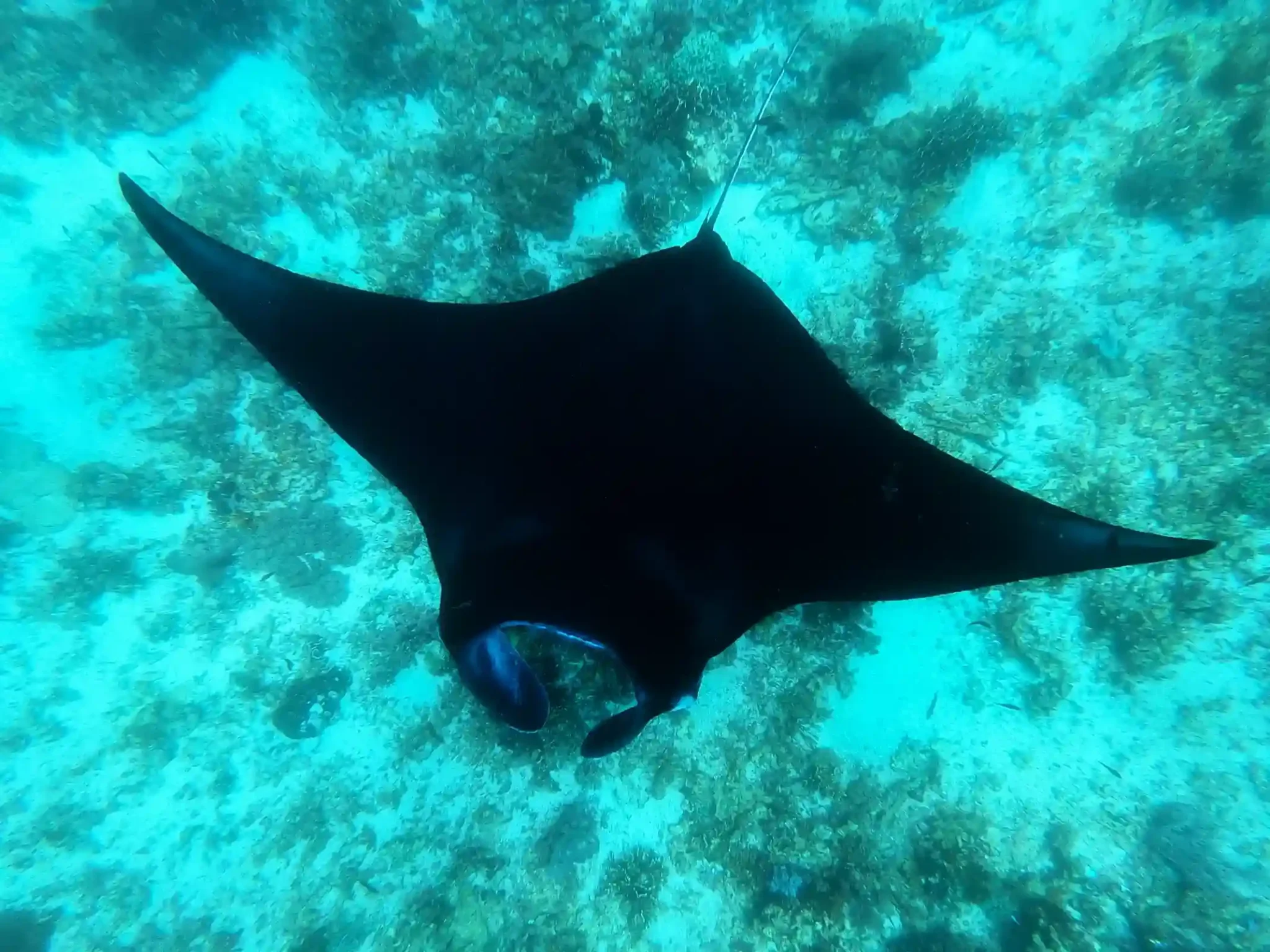
Manta rays are in Komodo all year, but the peak is December to March, when plankton-rich monsoon water draws them to the cleaning and feeding stations in numbers. The trade-off is real: those are also the roughest, wettest months. For manta sightings with calm water and good visibility, April and November are the best compromise in 2027.
This is the one question in Komodo where the best wildlife season and the best sailing season do not coincide, and most published advice quietly avoids saying so. Operators sell December to March as low season because the sea is rough. Divers call the same months manta season. Both are right.
When is the best month to see manta rays in Komodo in 2027?
| Month 2027 | Manta activity | Sea state | Visibility | Crowds & price | Verdict |
|---|---|---|---|---|---|
| January | Peak | Roughest — west monsoon | Reduced, plankton in the water | Quietest, lowest demand | For committed divers only |
| February | Peak | Rough | Reduced | Quiet | Same |
| March | Peak, easing | Improving late in the month | Improving | Quiet | Good value gamble |
| April | Good | Calm | Very good | Shoulder | Best all-round month |
| May | Reliable | Calm | Very good | Shoulder | Excellent |
| June | Reliable | Calm | Very good | Building | Excellent |
| July | Reliable | Windy in open straits | Good | Peak — busiest and priciest | Good, expensive |
| August | Reliable | Windy | Good | Peak | Good, expensive |
| September | Reliable | Calm | Very good | Easing | Excellent |
| October | Reliable | Calm | Very good | Shoulder | Excellent |
| November | Increasing | Calm, monsoon not yet set in | Very good | Shoulder | Best compromise with December’s build-up |
| December | Peak begins | Deteriorating | Reducing | Rises sharply over Christmas–New Year | Manta yes, comfort no |
Why the monsoon brings the mantas
Manta rays are filter feeders. From December to March the west monsoon pushes nutrient- and plankton-rich water through the straits, and the mantas follow the food. Sightings at the cleaning and feeding stations rise accordingly — and the same plankton that feeds them is what reduces visibility, so you may be looking at more animals through slightly murkier water.
Outside that window they do not leave. Karang Makassar — the site everyone calls Manta Point — hosts mantas year-round, because it functions as a cleaning station as well as a feeding area. That is the crucial fact for anyone planning a trip in the dry season: a good drift at Karang Makassar in May or September is a very reasonable prospect.
Where you actually see them
| Site | Depth | Current | Level | Notes |
|---|---|---|---|---|
| Karang Makassar / Manta Point | 8–18 m | Gentle to moderate drift (2–3 of 5) | All levels — open water plus around 10 dives; excellent for snorkellers | Mantas year-round; also eagle rays, bamboo sharks, cuttlefish |
| Manta Alley (south) | 5–25 m | Moderate to strong, choppy surface | Intermediate to advanced; negative entry | Highest density in the park; 20–50+ animals reported on good days |
| Mawan | 10–25 m | Moderate to strong (3–4 of 5) | Intermediate to advanced | Cleaning station plus hard-coral slope |
| Shotgun / The Cauldron | 10–25 m | Very strong (4–5 of 5) | Advanced only | Mantas in the channel; dramatic topography |
For most visitors on a standard 3D2N, Karang Makassar is the site in question. It sits on day two between Taka Makassar and the run to the night anchorage, and it is a snorkelling stop as much as a diving one — the animals feed near the surface, and you do not need a certification to be in the water with them. Where it falls in the day is set out in our 3D2N itinerary.
Manta Alley is a different proposition. It lies in the south, needs a longer itinerary to reach, sits in colder upwelling water — roughly 21 to 25 degrees at the peak of the June to September upwelling — and demands real current experience. It is also where the biggest aggregations are.
Tide beats month
On any given day the tide matters more than the calendar. Karang Makassar works on a manageable drift, and that window moves daily. This is precisely why captains swap the order of Manta Point and Taka Makassar without notice — they are chasing the right water, not following a printed schedule.
It is also the strongest practical argument for an overnight boat over a day trip. A day boat arrives when its timetable says. A boat that slept in the park arrives when the tide is right. And on a 4D3N you get a second attempt on a different tide, which for anyone travelling specifically to see mantas is worth more than any month on the calendar.
Behaviour in the water
Do not chase, touch or swim directly above a manta. Approach from the side, stay level or below, and let the animal decide. They are curious and will often pass close on their own terms; a swimmer chasing them clears the site for everyone. Do not use flash close in, and do not block the cleaning station itself — the animals are there for a reason and crowding it drives them off.
Planning 2027 around it
If mantas are the priority and you can handle weather, take March: the peak is still running, the sea starts settling, and demand is low. If you want the best overall trip with a strong chance of mantas, take April, May, September or October — calm water, best visibility, shoulder pricing. If you are travelling in July or August anyway, you will still see them; you will just pay peak rates and be windier. The full month-by-month picture is on our sea and crowd table, and vessel details are on our fleet page.
When is the best month to see manta rays in Komodo?
Can you see mantas in Komodo in the dry season?
Do I need to dive to see manta rays in Komodo?
How many mantas will I see?
Why did my guide change the time of the manta stop?
Is it safe to swim with manta rays?
Planning a 2027 trip around the mantas? Komodo Luxury will match your dates to the tide windows and tell you honestly what to expect — WhatsApp +62 811 3823 875 or sales@komodoluxury.com.
Seasonal patterns are typical rather than guaranteed; wildlife sightings are never certain. Site depths, current ratings and water temperatures are dive-operator norms for Komodo National Park and vary with conditions. See also: 2027 peak season dates and prices.
Send your dates and group size — the reservations desk replies with live availability and the current rate.
Keep reading
 Indonesian Long Weekends in 2027: When Komodo Boats Sell Out First
Season & 2027 Dates
Indonesian Long Weekends in 2027: When Komodo Boats Sell Out First
Season & 2027 Dates
 Is a Komodo Boat Trip Worth It From January to March?
Season & 2027 Dates
Is a Komodo Boat Trip Worth It From January to March?
Season & 2027 Dates
 How Komodo Departure Calendars Work in 2027, and When They Fill
Season & 2027 Dates
How Komodo Departure Calendars Work in 2027, and When They Fill
Season & 2027 Dates
 What Do Komodo Boat Trips Cost in 2027 Peak Season (July–August and New Year)?
Season & 2027 Dates
What Do Komodo Boat Trips Cost in 2027 Peak Season (July–August and New Year)?
Season & 2027 Dates