
 Lamborajo Editorial Desk
 On this page
Labuan Bajo to Padar is not a single hop. On a standard 3D2N the boat reaches Padar overnight, roughly six to eight hours of cumulative sailing broken by three stops, with the final Kalong–Padar leg of about three to four hours run in the dark. A direct daylight run on a fast boat is shorter but skips everything worth stopping for.
Nobody publishes a sailing-time table for Komodo. Operators quote itineraries in days, tour aggregators quote them in bullet points, and the question people actually ask — how long am I going to be sitting on this boat — goes unanswered. So here it is, leg by leg, with an honest statement of which figures are verified and which are operational norms.
What’s the sailing time from Labuan Bajo to Padar Island?
| Leg | Approximate time | Confidence | Notes |
|---|---|---|---|
| Labuan Bajo → Kelor | ~1 hour | Verified across operators | The one leg everybody agrees on; first stop of day one |
| Labuan Bajo → Kanawa | ~1–1.5 hours | Operational norm | Alternative first or last stop |
| Kelor → Manjarite | ~0.5–1 hour | Operational norm | Snorkelling stop |
| Manjarite → Kalong | ~1 hour | Operational norm | Arrive before dusk for the bat exodus |
| Kalong → Padar | ~3–4 hours | Operational norm | Run overnight or pre-dawn while guests sleep |
| Padar → Pink Beach | ~1–1.5 hours | Operational norm | After the sunrise hike |
| Pink Beach → Komodo Island | ~0.5–1 hour | Operational norm | Ranger-guided trek |
| Komodo → Manta Point (Karang Makassar) | ~0.5–1 hour | Operational norm | Timing set by tide, not distance |
| Manta Point → Taka Makassar | ~20–30 minutes | Operational norm | Often swapped in order with the manta drift |
| Taka Makassar → Siaba | ~1–1.5 hours | Operational norm | Sheltered night-two anchorage |
| Siaba → Kanawa | ~1–1.5 hours | Operational norm | Final morning |
| Rinca → Kalong | ~0.5–1 hour | Operational norm | On itineraries substituting Rinca for Komodo |
One figure in that table is verified explicitly across multiple published products: Labuan Bajo to Kelor, about one hour. The rest are operational norms derived from the scheduling windows operators actually work to. They are honest working numbers, not distances from a chart, and every one of them shifts with wind, tide, hull and engine.
Why the overnight leg is the whole point
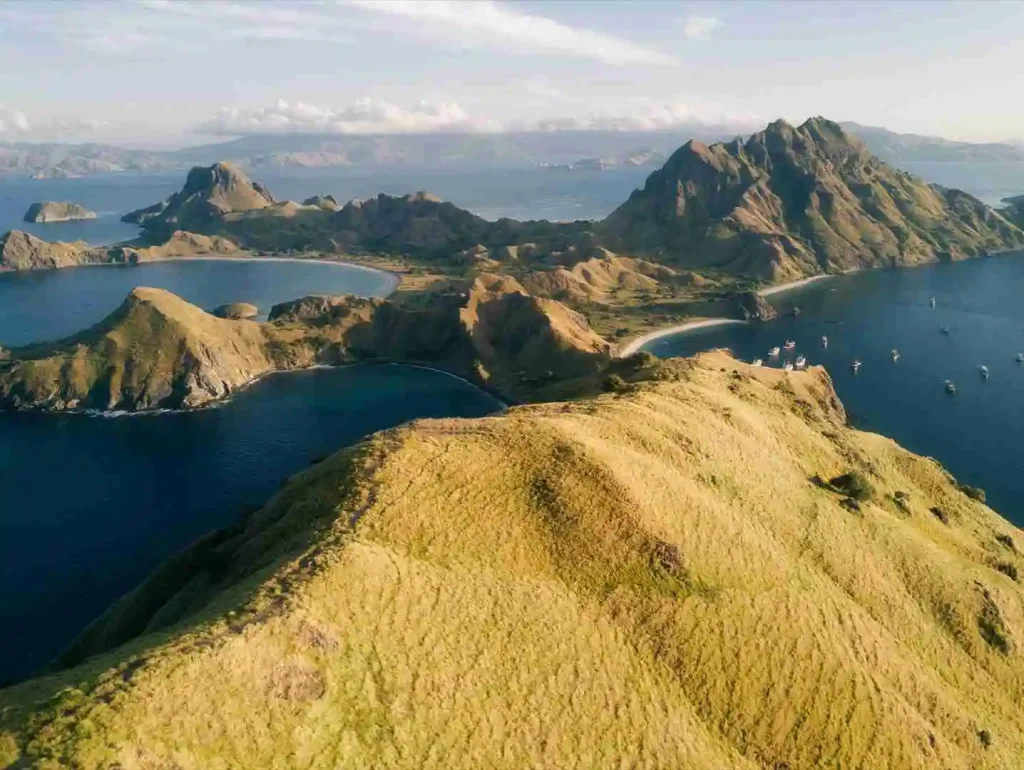
Padar’s ridge is a sunrise view. To be standing on it at 05:30 you need the boat anchored nearby before first light, which means covering the three to four hours from Kalong while you are asleep. That single fact explains the entire architecture of the Komodo itinerary: the boat is not just transport, it is the thing that moves you across the park at night so that daylight is spent on land and in the water rather than watching a wake.
It is also why day trips cannot deliver Padar at sunrise, and why compressing a 3D2N into two days removes the highlight rather than shortening it. The route detail sits on our 3D2N itinerary and departure times page.
How much of the trip is actually spent moving?
| Day | Approximate hours under way | Of which in daylight | Stops |
|---|---|---|---|
| Day 1 — Labuan Bajo to Kalong | ~2.5–3 hours | All | Kelor, Manjarite, Kalong anchorage |
| Night 1 — Kalong to Padar | ~3–4 hours | None | You are asleep |
| Day 2 — Padar to Siaba | ~3–4.5 hours | All | Padar, Pink Beach, Komodo or Rinca, Taka Makassar, Manta Point |
| Day 3 — Siaba to Labuan Bajo | ~2.5–3 hours | All | Siaba or Kanawa snorkel, then home |
| Total | ~11–14.5 hours over three days | ~8–10.5 hours | — |
Around four hours a day of daylight movement, in stretches of thirty minutes to an hour and a half, broken by swimming and hiking. That is a materially different experience from a long single crossing, and it is why people who dread boats usually cope well with this route.
What changes the numbers
Hull and power. A large phinisi with a proper engine holds a working speed in the region of seven to ten knots — Lamborajo III, at 38 metres by 6.8 metres, sits in that band. A standard wooden open-trip boat is slower, and a speedboat day-tripper is much faster but cannot anchor overnight in comfort. Fleet specifications are on our Lamborajo fleet page.
Tide. The straits around Komodo run hard. The same leg can take forty minutes with the current and seventy against it. This is also why the Manta Point and Taka Makassar stops routinely swap order — the captain is chasing slack water at the manta channel, not following a printed schedule.
Wind season. From December to March the west monsoon builds swell in the open stretches, particularly between Kalong and Padar. Captains run wider, slower and later, and occasionally do not run at all. April to June and September to November are the calm months.
Group size. A full boat takes longer to load and unload at every stop. Twenty-four people going ashore by tender is three or four runs; twelve people is two.
A note on the numbers you will find elsewhere
You will see confident claims like “Labuan Bajo to Padar: 4 hours” presented as fact. That figure describes a direct daylight run on a fast boat, which is a real thing but not what happens on an overnight itinerary. You will also see “Padar is 3 hours from Labuan Bajo”, which is roughly the same claim with a faster hull assumed. Neither is wrong; both are answering a different question from the one most travellers are asking.
Our position is simple: publish the legs, mark what is verified, and label the rest as approximate. A table you can check is more useful than a single number you cannot.
What’s the sailing time from Labuan Bajo to Padar Island?
How long is the boat ride from Labuan Bajo to Komodo Island?
Which is the roughest part of the route?
How fast does a Komodo phinisi sail?
Why did my itinerary swap Manta Point and Taka Makassar?
Can I visit Padar on a day trip from Labuan Bajo?
Want the leg times for your exact itinerary? Komodo Luxury will map your dates against tide and season — WhatsApp +62 811 3823 875 or sales@komodoluxury.com.
Only the Labuan Bajo–Kelor leg (~1 hour) is verified across published products; all other times are operational norms and are labelled approximate. Every leg shifts with wind, tide, hull and group size. No official distance or sailing-time table is published for Komodo National Park. See also: is Pink Beach really pink.
Send your dates and group size — the reservations desk replies with live availability and the current rate.
Keep reading
 Moyo and Satonda: The Stopovers That Make the Lombok to Komodo Route
Destinations & Wildlife
Moyo and Satonda: The Stopovers That Make the Lombok to Komodo Route
Destinations & Wildlife
 How Rough Is the Sape Strait Crossing on a Lombok to Komodo Trip?
Destinations & Wildlife
How Rough Is the Sape Strait Crossing on a Lombok to Komodo Trip?
Destinations & Wildlife
 What Is Komodo National Park, and Where Exactly Is It?
Destinations & Wildlife
What Is Komodo National Park, and Where Exactly Is It?
Destinations & Wildlife
 Komodo Island or Rinca: Where Do You Actually See the Dragons?
Destinations & Wildlife
Komodo Island or Rinca: Where Do You Actually See the Dragons?
Destinations & Wildlife