
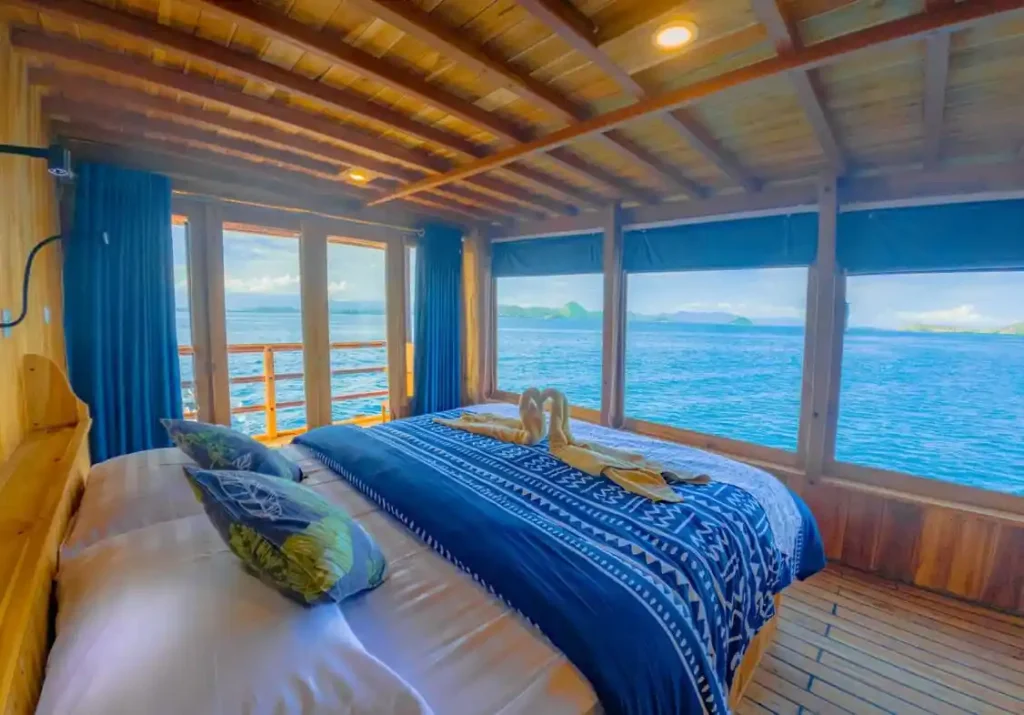
 Lamborajo Editorial Desk
 On this page
Komodo open trips are almost always priced per person, but the number you pay depends on what that “person” buys: a bunk in a shared cabin, half of a private double, or — on some premium phinisi — a whole cabin regardless of how many of you sleep in it. Understanding which of the three models an operator is using is the difference between comparing prices correctly and comparing them not at all.
Last updated: August 17, 2026
The three selling models on the harbour
Walk the agents’ offices in Labuan Bajo, or scroll the booking pages, and every shared departure falls into one of these structures:
- Per seat, shared cabin. You buy one bed in a four- or five-berth cabin. Solo travellers pay the flat per-person rate and share with strangers. This is the cheapest way onto the water and the default for backpackers.
- Per person, private cabin. The price is still quoted per person, but it assumes two of you in the cabin. A couple pays twice the per-person figure and gets the room to themselves.
- Per cabin. Premium boats increasingly sell the cabin itself, usually rated for two. One occupant or two, the cabin price is the cabin price.
The trap sits between the second and third models. A solo traveller who wants privacy on a per-person boat generally has to buy both beds — the so-called solo supplement — which means the “per person” headline quietly doubles. On a per-cabin boat the same thing happens, but at least the arithmetic is printed honestly on the rate card.
What the models mean for each type of traveller
| You are | Cheapest structure | Why |
|---|---|---|
| Solo, happy to share | Per seat, shared cabin | No supplement; you pay for exactly one bed |
| Solo, want privacy | Per cabin | The doubling is explicit, and some boats discount single occupancy on quiet dates |
| Couple | Per person, private cabin | Two fares fill the cabin exactly; nothing is wasted |
| Group of 8–12+ | None of the above — charter | Whole-boat rates divided by your headcount undercut seat prices |
That last row is the one most groups miss. Seat pricing exists to protect the operator from empty bunks; every shared ticket carries a margin for the beds that might not sell. Bring enough people to fill a boat and that margin is yours to keep. We walk through the full arithmetic on our Komodo open trip price per person guide, with seat rates set against charter division for every group size.
Where the break-even sits
On our published card — the same one on the Lamborajo prices and booking page — a whole-boat 2D1N charter of Lamborajo I starts at USD 3,400 for up to twelve guests. Twelve people splitting that pay about USD 283 each for a private vessel, crew and galley included. At twenty-four guests on a 3D2N charter, the per-person figure lands near USD 203 for the entire trip. Against those numbers, most per-seat cabin classes on the harbour stop making sense somewhere between eight and twelve travellers.
Below eight, the seat wins. A pair of travellers cannot sensibly hire a 24-berth boat, and a scheduled departure with a professional calendar is exactly what shared pricing is for. If your dates are fixed and your party is small, browse the Labuan Bajo liveaboard departures across the wider fleet network and buy the cabin class that matches your tolerance for company.
Questions worth asking before you pay for any seat
- Is the quote per person sharing, per person assuming double occupancy, or per cabin?
- What happens to the price if you end up the only person in a twin cabin?
- Are Komodo National Park fees included? The regulated entrance component is IDR 250,000 per foreign visitor under PP No. 36/2024, and it is almost never in the seat price.
- Does the boat guarantee departure, or does it cancel below a minimum headcount?
Quick answers
Is a Komodo open trip cheaper than a charter?
For one to seven travellers, almost always yes — you are only paying for the beds you use. From about eight people the comparison narrows, and past twelve a filled charter usually costs less per head than mid-tier seat classes, while removing strangers, fixed menus and other people’s schedules from the trip entirely.
Do open trip boats charge more in high season?
Most operators publish one card but manage demand through availability: peak-season departures simply sell out earlier, and the remaining boats holding space are the pricier ones. The practical effect is the same as a surcharge, which is why June-to-September seats bought late rarely match the advertised entry price.
What does a seat price usually include?
The pattern across the harbour: meals, drinking water, snorkelling gear, tender landings and the crew are in; park entrance and ranger fees, alcohol, and gratuities are out. Any quote that will not itemise those exclusions in writing should be treated as incomplete rather than cheap.
The last question matters more than the price. A per-seat boat that needs fourteen passengers to sail can strand you in a hotel on the morning your holiday was supposed to start. Cabin classes and headline rates vary; a written departure guarantee is the thing worth paying a little extra for. Compare the structures on our fleet specifications and rates page, and if the arithmetic tips you toward taking a whole boat instead, message the reservations desk on WhatsApp with your headcount and dates.
Current per-seat and per-cabin departure prices are published on the operator’s Komodo open trip schedule.
Send your dates and group size — the reservations desk replies with live availability and the current rate.
Keep reading
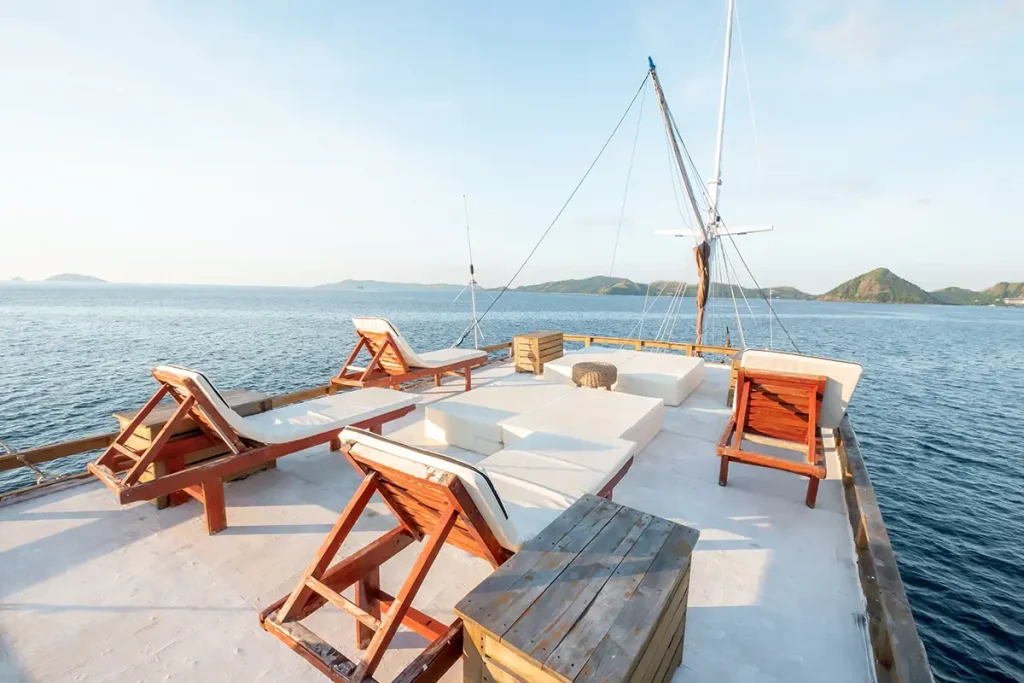 A Working Rundown for a Two-Day Staff Gathering on a Komodo Boat
Planning & Costs
A Working Rundown for a Two-Day Staff Gathering on a Komodo Boat
Planning & Costs
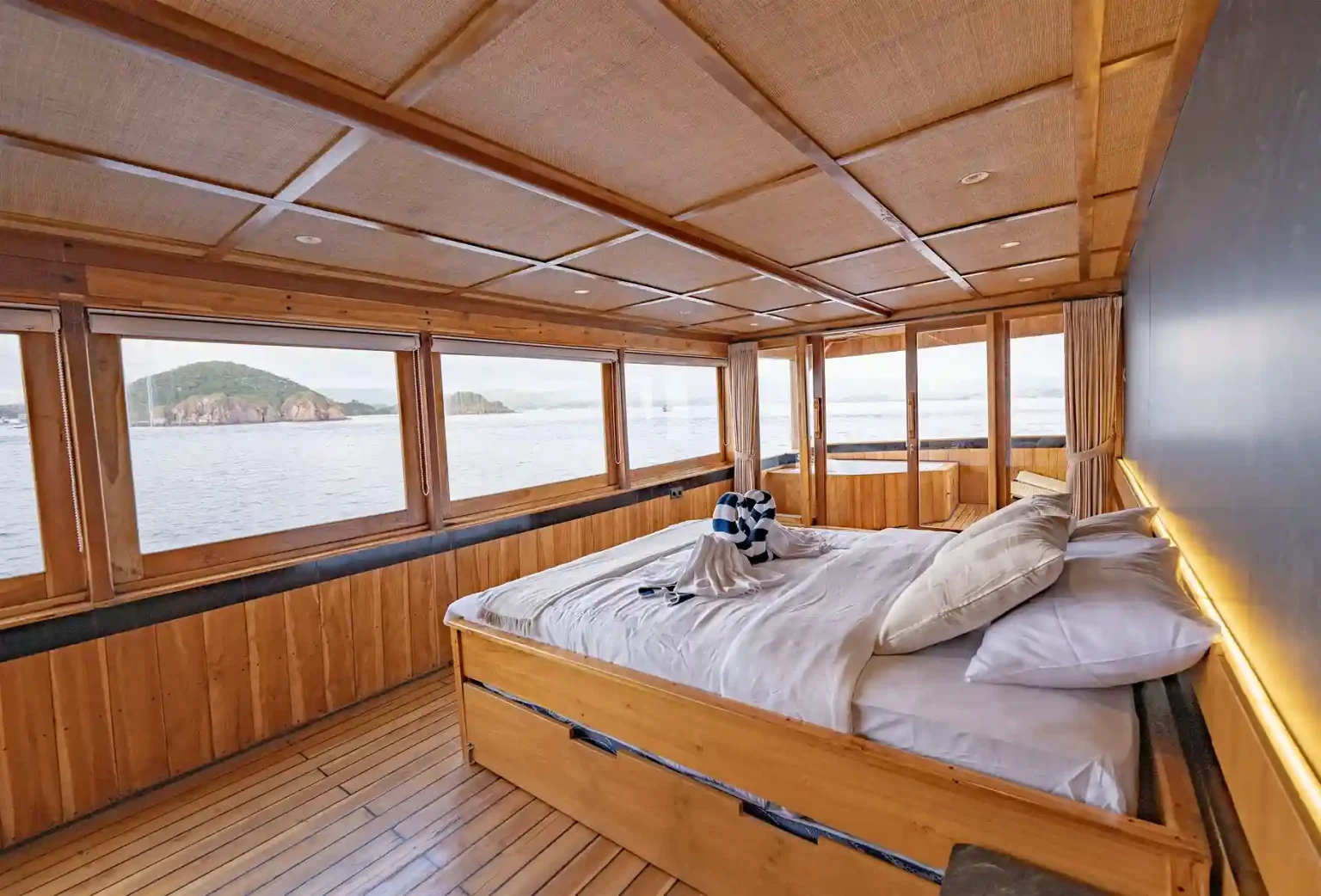 How Far in Advance Should a Group of 20 Book a Komodo Boat for 2027?
Planning & Costs
How Far in Advance Should a Group of 20 Book a Komodo Boat for 2027?
Planning & Costs
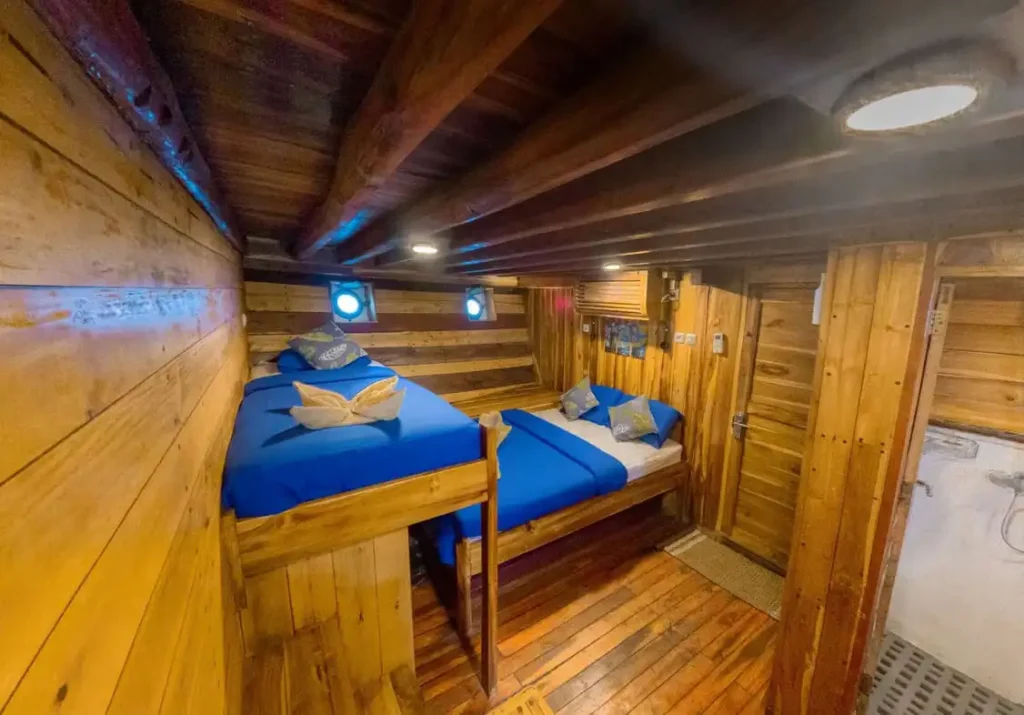 How to Split a Komodo Boat Charter Cost With Friends, Fairly
Planning & Costs
How to Split a Komodo Boat Charter Cost With Friends, Fairly
Planning & Costs
 Which Airlines Fly to Labuan Bajo (Komodo Airport), and Where From?
Planning & Costs
Which Airlines Fly to Labuan Bajo (Komodo Airport), and Where From?
Planning & Costs