

 Lamborajo Editorial Desk
 On this page
A Komodo boat trip from January to March is worth it for one specific traveller: the one who values empty anchorages, the greenest version of the islands and peak manta season enough to accept rain bursts, reduced visibility and a real chance of itinerary reshuffles. For everyone else — first-timers with fixed dates, groups with zero flexibility — the dry season remains the honest recommendation.
Last updated: August 17, 2026
What the weather actually does
The west monsoon owns this window, and it behaves more precisely than its reputation suggests:
- January. The wettest stretch — often 12 to 20 rain-affected days — but the rain arrives mostly as short, heavy bursts of an hour or ninety minutes, frequently in the afternoon or overnight, not as all-day grey. Winds are the real factor: sustained northwesterlies of 20–25 knots on the bad runs, and on the roughest days the harbour master holds boats in port.
- February. Frequently the highest monthly rainfall on the charts, with similar burst patterns and the same wind caveats. Some operators pause mid-January to early February entirely; the ones sailing run flexible itineraries and mean it.
- March. The turn. Rainy days drop toward single digits, winds slacken week by week, and by the second half the park is effectively in shoulder season while still priced and crowded like the low. For value hunters, late March is the quiet sweet spot of the whole year — set against the month-by-month picture on our sea and crowd table.
What you get in exchange
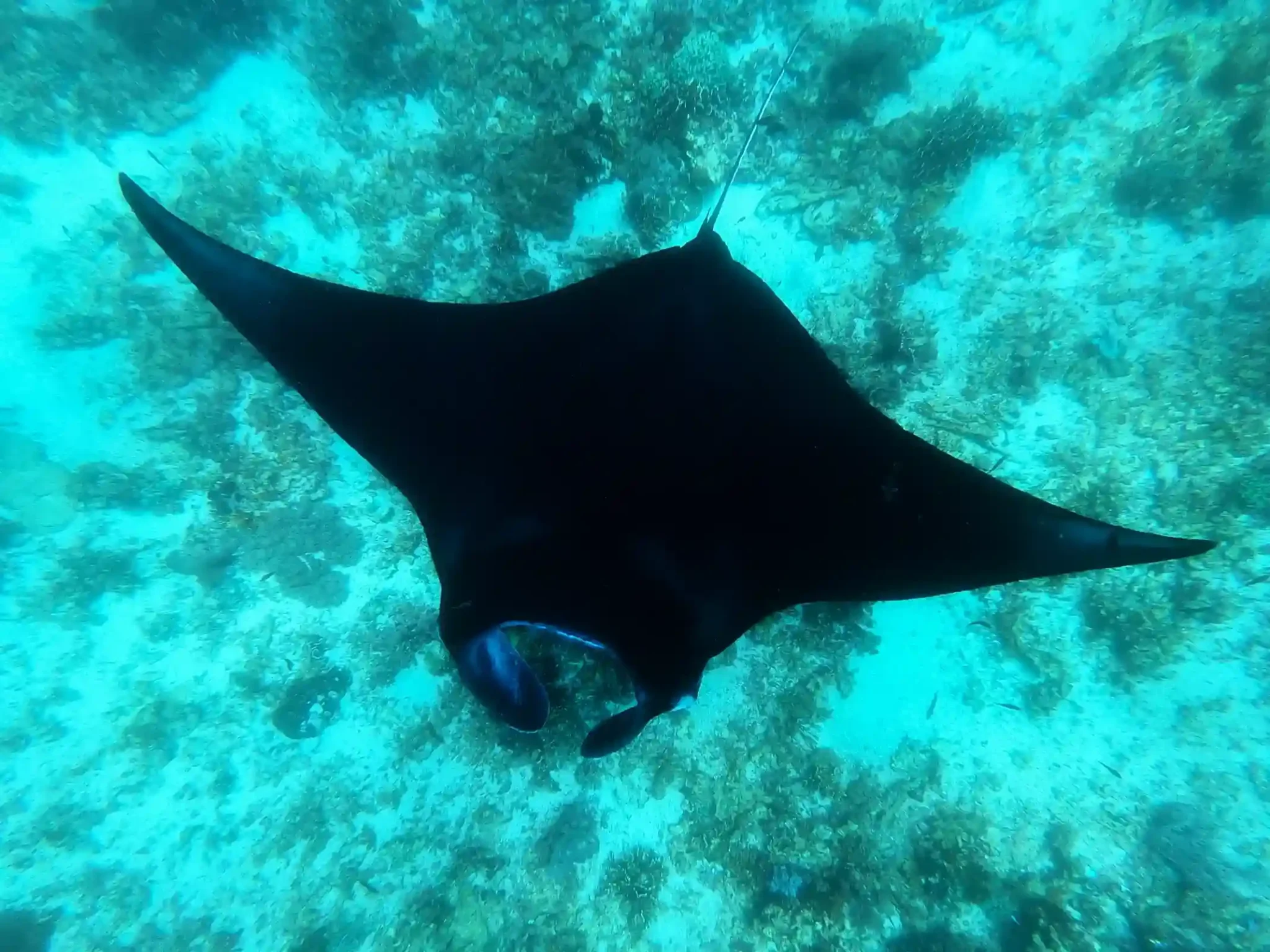
- Mantas at their peak. The plankton-rich wet-season water that cuts visibility to 10–20 metres is exactly what concentrates manta rays at the feeding sites. January–March is widely regarded as the strongest window of the year for encounters.
- The islands, green. The savanna hills that photograph golden-brown in August are emerald from December rain. Padar in February looks like a different, wilder country.
- Solitude that peak season cannot buy. Anchorages that hold a dozen boats in July hold one or two. Dragon treks run at your pace; viewpoints are yours.
- Total calendar freedom. Every hull, every date — leverage a July group can only dream about, as the 2027 sailing schedule makes obvious at a glance.
Who should and should not book it
Book it: returning visitors, photographers chasing the green season, manta-focused snorkellers, flexible couples, and any group that can add a buffer day without drama. Skip it: once-in-a-lifetime first-timers, anyone connecting to tight international flights, and organisers of large office trips — twenty colleagues and a weather clause make a fragile combination, and the season’s one hard demand spike (Christmas–New Year, just before this window) proves boats can sell out even in the rain.
How to book this window intelligently
- Build the buffer day. Put a spare day between the boat and any onward flight. If the weather never uses it, Labuan Bajo town will.
- Get the weather clause in writing. When a captain cancels on safety grounds, reputable operators reschedule or refund — confirm which, before paying.
- Favour bigger hulls. Waterline length is comfort in a leftover swell; this is the season the 38-metre flagship earns her keep over smaller boats.
- Let the captain re-sequence freely. The groups that suffer in the wet season are the ones that treat the printed itinerary as a contract instead of a plan.
Quick answers
Is snorkelling still good in the wet months?
Yes, with adjusted expectations: visibility runs 10–20 metres rather than the dry season’s 25-plus, but water stays warm at 28–30°C and the marquee sites still deliver — this is when the mantas are most reliable, which for many travellers settles the argument by itself.
Are prices lower from January to March?
Published charter cards generally hold year-round; what improves is choice and negotiating position on extras, plus genuinely cheaper flights and hotels around the boat. The trip’s total cost drops even when the boat’s line item does not.
Do boats actually sail every week in this season?
Most weeks, yes — pauses cluster in the worst mid-January-to-early-February stretch and around harbour-master holds. Shared departures thin out; charters sail to their own calendar. The wider Labuan Bajo liveaboard network keeps hulls moving all season, and the desk on WhatsApp will tell you plainly which weeks look sailable when you ask.
What should a wet-season packing list add?
Three things beyond the standard kit: a genuinely waterproof dry bag for cameras on tender runs, a light rain shell for the burst showers, and quick-dry everything — cotton stays damp for days in ninety-percent humidity. Skip the umbrella; nothing about a boat deck in a squall wants an umbrella.
Send your dates and group size — the reservations desk replies with live availability and the current rate.
Keep reading
 Indonesian Long Weekends in 2027: When Komodo Boats Sell Out First
Season & 2027 Dates
Indonesian Long Weekends in 2027: When Komodo Boats Sell Out First
Season & 2027 Dates
 How Komodo Departure Calendars Work in 2027, and When They Fill
Season & 2027 Dates
How Komodo Departure Calendars Work in 2027, and When They Fill
Season & 2027 Dates
 What Do Komodo Boat Trips Cost in 2027 Peak Season (July–August and New Year)?
Season & 2027 Dates
What Do Komodo Boat Trips Cost in 2027 Peak Season (July–August and New Year)?
Season & 2027 Dates
 When Is the Best Month to See Manta Rays in Komodo in 2027?
Season & 2027 Dates
When Is the Best Month to See Manta Rays in Komodo in 2027?
Season & 2027 Dates